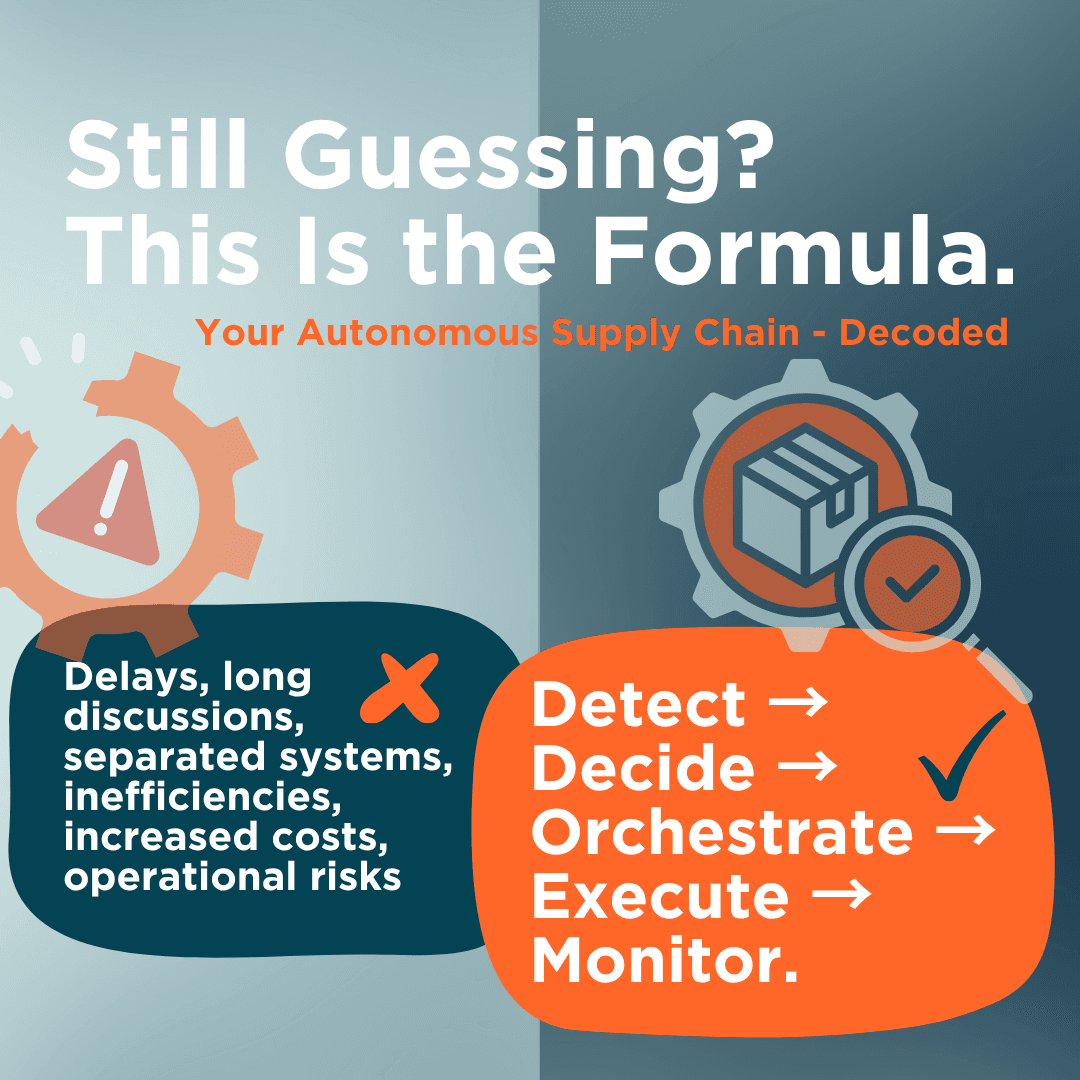
In many supply chains, the challenge is no longer identifying disruptions - it's responding to them quickly and consistently. A delay is detected, reviewed by a planner, discussed via email and in meetings, and eventually acted upon in a separate system. This disconnection between insight and execution creates inefficiencies, increases costs, and elevates operational risk. Autonomous supply chains close this gap by directly linking decision-making to execution. Rather than stopping at alerts and recommendations, they automatically trigger the appropriate actions based on predefined business rules, real-time data, and integrated workflows. The result is faster response times, greater operational agility, and processes capable of resolving routine issues with minimal human intervention.
The Current State of Supply Chain Execution
Today, most organizations rely on manual exception handling:
- •Demand changes require planner intervention.
- •Shipment delays trigger emails and coordination.
- •Inventory shortages require manual review.
- •Planning systems generate recommendations, but execution occurs separately.
The disconnect between planning and execution creates delays and increases the possibility of human error.
What changes in an Autonomous Supply Chain?
An autonomous supply chain does not replace human decision-making. Instead, it automates routine responses based on predefined business logic.
- •Increased demand automatically triggers supply adjustments.
- •Inventory shortages initiate stock reallocation.
- •Shipment delays trigger rerouting recommendations.
- •Production constraints update downstream commitments.
The key difference is that action automatically follows insight, eliminating unnecessary manual coordination.
Autonomous Supply Chain Data Model
Mygo Approach to Autonomous Execution
Mygo focuses on three critical areas:
1. Decision Standardization Business knowledge is converted into structured rules that systems can execute consistently.
2. Planning-to-Execution Integration Decisions generated in planning systems automatically flow into logistics, procurement, manufacturing, and warehouse execution systems.
3. Cross-System Orchestration Processes span SAP and non-SAP environments. Mygo ensures actions move seamlessly across systems without manual intervention.
Business Benefits
When implemented correctly:
- •Reduced manual exception handling
- •Faster response to disruptions
- •Improved service levels
- •Lower operational costs
- •Better planner productivity
- •Higher supply chain resilience
The result is not a fully automated supply chain, but one in which routine disruptions resolve themselves and planners focus on strategic decisions rather than transactional activities.
Mygo Vision Detect → Decide → Orchestrate → Execute → Monitor
This closed-loop model transforms supply chains from reactive operations into intelligent, self-resolving networks.
Curious how this works in your environment? Let’s explore it together with Mygo.