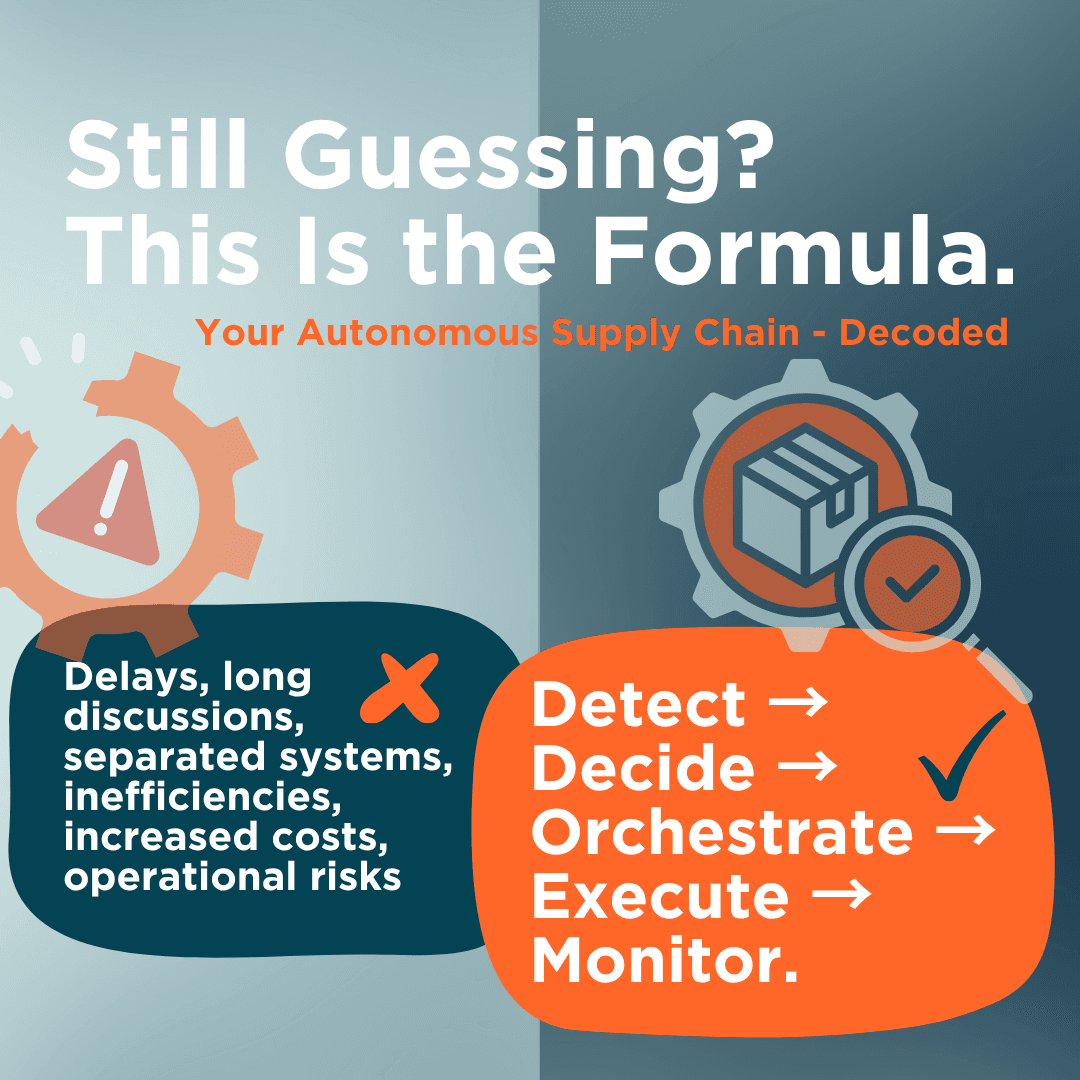
SAP Sapphire never fails to set the tone for the year ahead. But this year felt different. The conversation shifted - decisively - from “how do we implement AI?” to “how do we build an enterprise that runs itself?” That’s the promise behind SAP’s Autonomous Enterprise vision, and it has serious implications for every transformation leader, customer, and systems integrator in the ecosystem. Sapphire 2025 we heard many customers with a wait and see attitude, having valid concerns around data security and hallucinations driving real business decisions. Sapphire 2026 customers had a general sense of how they need to catch up to ensure they don’t get left behind by competitors further along in developing the Autonomous Enterprise vision.
Here are my key takeaways from the Business Transformation Management track - and why they matter to the organizations we work with every day.
1. The Autonomous Enterprise Is Not a Product - It’s an Operating Model Shift
The headline at Sapphire wasn’t a new module or a pricing change. It was a fundamental rethink of how enterprises will operate. SAP’s vision of the Autonomous Enterprise describes organizations that use real-time intelligence to guide decisions, orchestrate processes end to end, and continuously adapt as conditions change - with AI embedded into the fabric of every function. What struck me is that this isn’t a destination. It’s a direction of travel. And the organizations that will get there fastest are the ones that start laying the right foundations now - not the ones waiting for the technology to mature.
2. Governance of AI Agents Is Already a Real Problem
One of the most practical announcements at Sapphire was the general availability of the SAP AI Agent Hub. The numbers speak for themselves: 150 companies already using it, with over 100,000 AI agents under management. That’s not a pilot. That’s production scale. This tells me that agent proliferation is happening faster than most organizations are prepared for. The question I’d ask any business leader right now is: do you know how many AI agents are active in your enterprise landscape? Who owns them? What policies govern them? Most can’t answer that yet. The AI Agent Hub is positioned as the system of record for agents, LLMs, and MCP servers - essentially bringing the same governance discipline we apply to enterprise architecture into the agentic world. That’s the right instinct, and it’s something we need to be building into every transformation program from day one.
3. Your Process Knowledge Is the New Competitive Moat
This was arguably the most thought-provoking concept I took away from the event: SAP Signavio’s notion of “company memory.” The idea is that the tribal knowledge embedded in how your organization actually operates - the business rules, the workarounds, the preferences that live in people’s heads and scattered documents — needs to be captured, structured, and made accessible to AI agents. SAP calls the building blocks of this “process atoms.” This isn’t just a technology play. It’s an institutional knowledge play. Organizations that invest in documenting and formalizing how they work will have a decisive advantage - because their AI agents will operate with context. Everyone else’s agents will be flying blind. From a delivery perspective, this reinforces something we’ve known for years: process work isn’t overhead. It’s the foundation everything else sits on.
4. Enterprise Architecture Finally Has a Seat at the AI Table
SAP LeanIX introduced a new Enterprise Architecture Assistant backed by AI agents - including one that mines internal content to enrich architecture data, and another that scans the web for vendor and application intelligence. Significantly improved semantic search now lets AI co-pilots and agents seamlessly access architecture data. This matters because enterprise architects have historically been brought in late, after key technology decisions are already made. AI is changing that dynamic. When your architecture data is accessible to agents in real time, the EA function becomes an active participant in how the business operates - not just a documentation exercise. For our customers mid-transformation, this is a strong signal to get your architecture data house in order. The returns will compound as agentic capabilities scale.
5. Transformation Is Continuous - Your Operating Model Should Reflect That
SAP cited recent Forrester research reinforcing what most of us already know from experience: business transformation doesn’t end with go-live. It never did. But for too long, organizations have treated transformations as projects - with a beginning, a budget, and a cutover date - rather than as an ongoing capability. The BTM announcements at Sapphire are built around this reality. The tools, the governance frameworks, the process intelligence capabilities - they’re all designed for an enterprise that is perpetually evolving. That’s the right design principle, and it has implications for how we staff, contract, and measure success on every engagement.
What This Means for Business Leaders
The common thread across everything I saw in the BTM track is this: the value of AI in your enterprise is bounded by the quality of the foundation beneath it. Process knowledge, architecture governance, agent oversight — these aren’t nice-to-haves in an AI-first world. They are the table stakes. My recommendation: don’t wait for your AI strategy to mature before investing in these foundations. The organizations winning at Sapphire weren’t the ones with the most impressive demos - they were the ones that had done the unglamorous work of getting their process and data foundations right.
That’s where Mygo focuses, and it’s where we see the most durable value for our customers.